Solar array bird exclusion
Solar Panel Bird Proofing for NYC Rooftops
Bird Control NYC designs humane solar panel bird proofing for New York City rooftops, homes, co-ops, condos, commercial buildings, warehouses, schools, restaurants, and managed properties where pigeons are nesting beneath arrays or leaving droppings around roof equipment.
NYC rooftop conditions
Solar panels create sheltered bird habitat when the edges are left open.
On NYC rooftops, solar arrays sit close to parapets, bulkheads, roof drains, HVAC equipment, conduits, service walkways, setbacks, and neighboring ledges. Pigeons use the protected space beneath panels because it offers shade, cover from weather, and a concealed place to nest. Once birds learn that the array is safe, droppings and nesting debris can collect around wiring, brackets, roof membranes, drains, and maintenance paths.
Solar panel bird proofing is not the same as placing generic spikes on a ledge. The system has to block access under the array without damaging panels, wiring, mounting hardware, or the roof surface. A good scope accounts for panel clearance, roof membrane sensitivity, drainage, wind exposure, electrical components, and the nearby surfaces that may continue attracting birds after the panel edges are protected.
Common solar array bird problems
- Pigeons nesting under rooftop solar panels.
- Droppings around panel edges, drains, wiring, and roof walkways.
- Nesting material below panels, rails, conduit, and brackets.
- Bird activity returning after repeated cleanup.
- Maintenance teams unable to access parts of the array comfortably.
How the review works
Solar panel bird proofing starts with the array edges and the surrounding roof.
1. Identify the entry points
We look at which panel edges birds are using, whether the activity is isolated to one side of the array, and whether nearby parapets, bulkheads, railings, or roof equipment are feeding the pressure.
2. Check roof and equipment conditions
The recommendation should respect panel frames, wiring paths, conduit, mounting hardware, roof membranes, drains, service walkways, and any access rules set by the owner or property manager.
3. Recommend humane exclusion
The goal is to close the access points beneath the array with a protective exclusion detail that helps stop re-entry without trapping birds or interfering with the solar system.
What makes the work different
The right solar panel bird guard should block access without compromising the system.
Solar arrays are functional equipment, not decorative ledges. A bird-proofing system needs to be secure enough to discourage re-entry but careful enough to avoid the wrong attachment points. The work should not restrict drainage, pinch wiring, interfere with electrical components, or make future solar service unnecessarily difficult.
For NYC buildings, access planning is part of the job. A small residential roof may need a simple approach around panel edges and roofline access. A co-op, condo, school, commercial property, warehouse, or restaurant may need COI coordination, superintendent communication, roof scheduling, solar vendor coordination, or a plan that keeps service paths clear. The recommendation should fit the way the roof is actually managed.
Details that matter
- Panel clearance and edge depth.
- Roof membrane and flashing sensitivity.
- Wind exposure on open rooftops.
- Existing nesting material and droppings.
- Nearby landing surfaces that may need separate deterrents.
Properties that benefit from solar bird proofing
- Homes and townhouses with rooftop solar arrays.
- Co-ops, condos, and apartment buildings with managed roof access.
- Warehouses, schools, houses of worship, and commercial rooftops.
- Restaurants and mixed-use buildings with solar panels near equipment zones.
- Properties where birds are affecting roof drains, roof surfaces, or maintenance routes.
Why timing matters
Solar bird issues usually get more expensive after birds settle in.
Once pigeons learn that the space beneath an array is protected, the roof can become a recurring roosting and nesting site. Debris may collect behind panel edges. Droppings can affect roof walkways, drains, electrical runs, nearby mechanical equipment, and the areas where maintenance teams need to work.
Early exclusion is often simpler than waiting until the array has heavy nesting material underneath. If the problem is already active, the next step is still straightforward: document the condition, identify access points, determine whether cleanup is needed, and install a humane exclusion system once the area can be treated properly.
Humane and legal approach
We focus on exclusion, not trapping or harming birds.
Bird Control NYC uses humane bird deterrent and exclusion methods. Active nests, eggs, and young birds have to be handled properly and in accordance with applicable wildlife rules. If nesting activity is present, the first step is to inspect and explain the condition before deciding when the area can be cleared, cleaned, and protected.
The long-term solution is prevention. Solar bird proofing should make the underside of the panels unavailable for future nesting while preserving ventilation, drainage, roof access, and equipment function. When nearby roof edges, parapets, bulkheads, or vents are also active, those conditions may need to be addressed so the pressure does not simply move a few feet away.
What to send for review
- Wide photos of the full solar array and roof layout.
- Close-ups of panel edges where birds enter.
- Photos of droppings, nesting material, drains, wiring, and conduits.
- Borough, property type, roof access notes, and approximate height.
- Whether a property manager, board, or solar contractor is involved.
Related prevention
Solar panel bird proofing often connects to the rest of the roof.
Birds nesting under panels may also use parapets, bulkheads, roof rails, drain areas, facade ledges, AC equipment, vent openings, or nearby terraces. If only the solar array is protected while the surrounding roof still gives pigeons easy landing and shelter, the pressure may shift instead of fully improving. That is why solar work should connect naturally with rooftop bird control, pigeon control, bird netting, and nesting prevention when the building condition calls for it.
Pigeon Control NYC | Bird Netting NYC | Rooftop Bird Control NYC | Bird Nesting Prevention
Visual proof placeholders
Solar bird-proofing results should be easy to document.
These placeholders can be replaced later with actual project photos: the underside of an active array before exclusion, the cleaned edge condition, and the finished protective barrier. For solar jobs, good photos should show both the panel edge and the surrounding rooftop context so property managers and owners understand what was protected.
Request a solar bird-proofing review.
Send photos of the full array, close-ups of panel edges, droppings, nesting material, nearby parapets, roof drains, and any access restrictions.
Questions
Solar Panel Bird Proofing FAQ
Can bird proofing be installed without removing the solar panels?
In many cases, yes. The correct approach depends on panel clearance, mounting hardware, roof access, and the amount of nesting material present.
Will the system damage the solar panels?
The goal is a non-invasive exclusion approach that protects panel edges without interfering with the panels, wiring, roof surface, or future maintenance.
Do you work with property managers and solar contractors?
Yes. Solar bird proofing often requires coordination around roof rules, access, COI requirements, maintenance teams, and existing solar service providers.
Should cleanup happen before exclusion?
If droppings or nesting material block the work area or attachment points, cleanup may be recommended before installation. The site review should determine that before work begins.
Related bird control services
Rooftop Bird Control NYC | Property Management Bird Control NYC | Commercial Bird Control | Residential Bird Control | Pigeon Control NYC | Bird Netting NYC | Bird Nesting Prevention | All Bird Control Services
Solar Panel Work
Solar Panel Bird Proofing and Critter Guard Installation
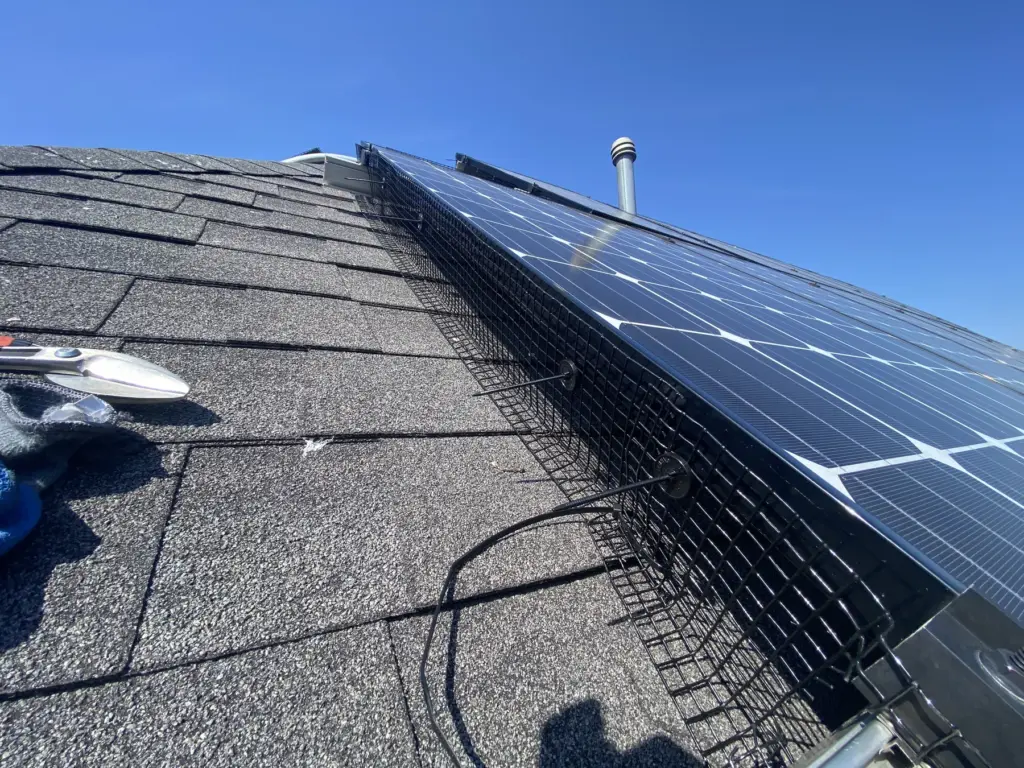
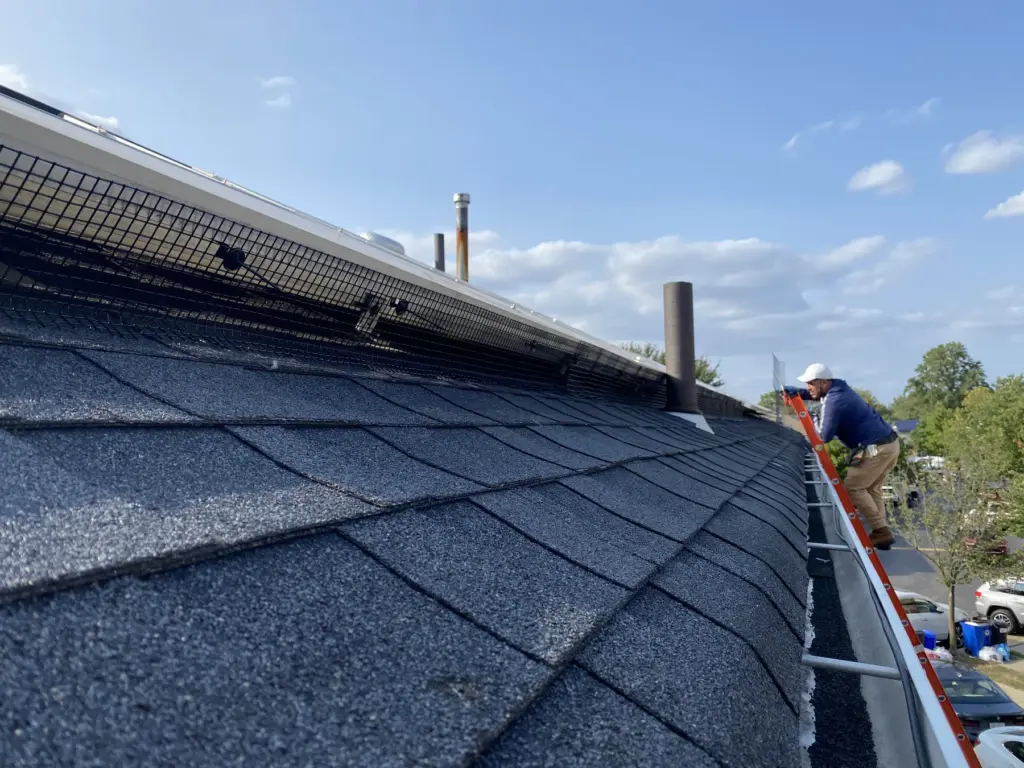
Birds commonly use the shaded gap under solar panels for nesting. These photos show rooftop access, edge protection, mesh detail, and finished critter guard work.
Protected Panel Edge
Mesh is fitted along the solar array edge to help block nesting access without covering the panel surface.
Rooftop Installation
The installation approach depends on roof access, panel layout, wire routing, and safe work conditions.
Finished Bird Proofing
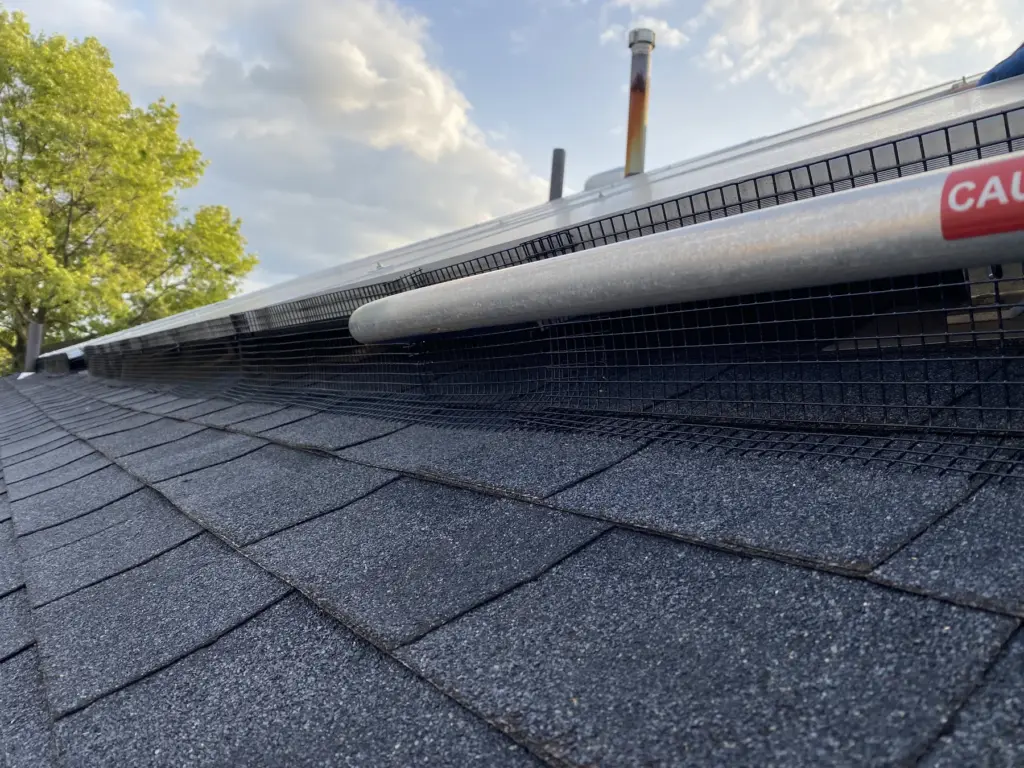
Finished protection should look clean and help reduce re-entry under the array.
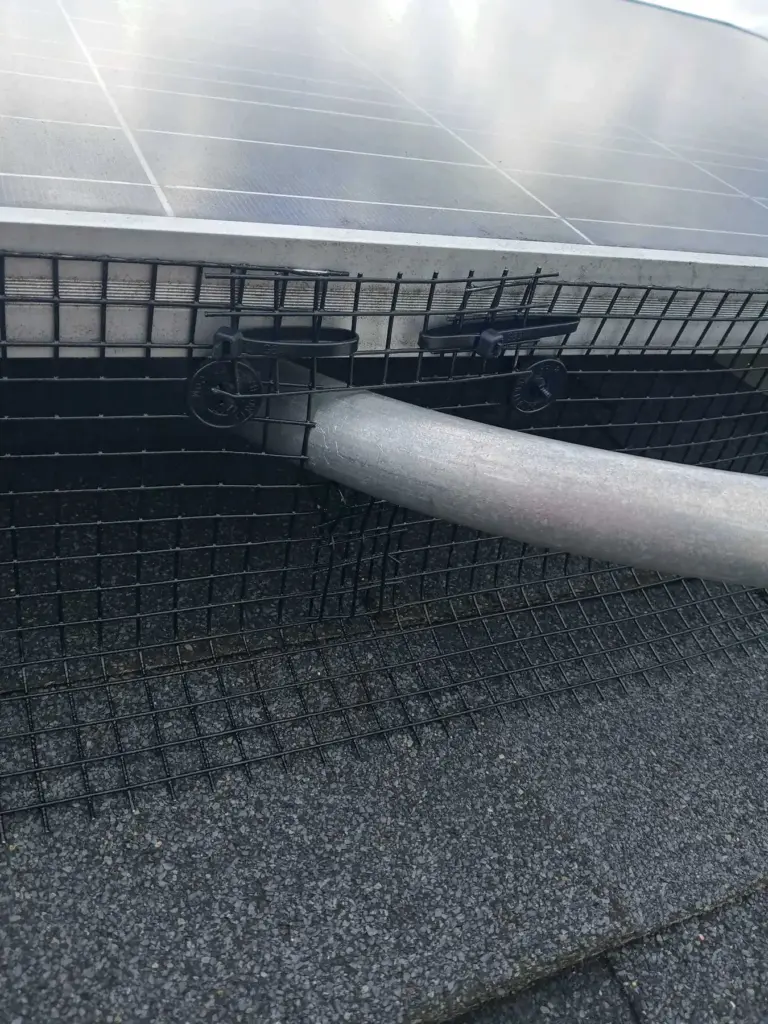
Critter Guard Detail
A close-up view helps show the physical barrier used to reduce bird nesting under solar panels.
Recent Comments