
Humane ledge deterrents
Bird Spikes NYC
Professional bird spike installation for ledges, parapets, cornices, storefront signs, beams, rail caps, light fixtures, fire escapes, AC areas, and other narrow landing surfaces across NYC.
What spikes actually do
Bird spikes work when the landing surface is understood.
Bird spikes are a humane deterrent, not a trap. A properly selected spike system makes a narrow surface difficult for pigeons and other urban birds to land on comfortably. That can be very effective on window ledges, parapet caps, sign bands, cornices, beams, rail caps, lights, and storefront details where birds repeatedly perch before droppings collect below.
The key is coverage. If the spike row is too narrow, too short, poorly placed, or installed around untreated gaps, pigeons may simply stand behind it, beside it, or on the next available ledge. NYC buildings are full of small architectural details that create backup landing spots. Good spike work reads the entire surface, not just the dirtiest section.

Best-fit surfaces
Where bird spikes are commonly useful in NYC.
Facade ledges
Window ledges, decorative trim, cornices, AC sleeves, sign bands, storefront details, and front-facing elevations where appearance matters.
Rooftop edges
Parapet caps, coping stones, roof rails, bulkhead details, hatch surrounds, and edges where pigeons use the roofline as a routine perch.
Commercial structures
Loading dock beams, storefront signs, awning frames, exterior light fixtures, warehouse ledges, and customer-facing entrance areas.
Design details
The spike layout matters as much as the product.
Professional spike installation considers ledge depth, bird pressure, attachment surface, drainage, visibility, cleaning needs, and the direction birds approach from. On a shallow ledge, a single row may be enough. On a deeper parapet or sign cabinet, multiple rows or a different method may be needed. On a decorative facade, the installation should look deliberate and avoid careless adhesive marks or uneven placement.
Spikes are often part of a larger plan. A storefront may need spikes on the sign band and exclusion around a small gap. A rooftop parapet may need spikes on the coping and netting near equipment. A balcony may need netting instead of spikes if birds are entering the whole space. We recommend spikes only when they match the behavior and the surface.
Professional installation
Bird spikes should protect the property, not make it look improvised.
NYC building owners often care about appearance as much as function. A visible facade, restaurant entrance, co-op exterior, retail sign, or high-rise parapet cannot look patched together. We plan spike systems around sight lines, access, material compatibility, and the people who will see or maintain the area after installation.
Trust signals that matter
- Insured and COI-ready for buildings and management teams.
- Humane, non-lethal landing deterrents.
- Commercial and residential spike scopes.
- High-rise, rooftop, facade, and storefront planning.
- Clear recommendations when spikes are not the right method.
Process
How bird spike projects are evaluated.
1. Confirm the landing area
We look for droppings, feathers, bird traffic, ledge dimensions, approach angles, and nearby untreated surfaces that could become substitute perches.
2. Match spike type and coverage
The system should fit the ledge depth, material, visibility, and pressure level. Some surfaces need wider coverage or another deterrent entirely.
3. Plan access and attachment
We account for roof access, ladder access, storefront timing, facade visibility, management rules, cleanup needs, and future maintenance.
Serving all 5 boroughs
Bird spike installation for Manhattan, Brooklyn, Queens, the Bronx, and Staten Island.
We install and scope bird spikes for Manhattan parapets and storefronts, Brooklyn mixed-use cornices, Queens warehouses and signs, Bronx apartment ledges and fire escape areas, and Staten Island homes, terraces, and rooflines. The details change, but the standard is the same: humane, durable, clean-looking coverage designed around the actual landing pattern.
Get a spike recommendation.
Send wide photos, close-ups of the ledge, approximate height, borough, surface material if known, and a description of where birds sit or where droppings collect.
When spikes are not enough
Some pigeon problems need more than a row of spikes.
Bird spikes are excellent for the right surface, but they are often misused. A deep parapet, open balcony, loading dock cavity, roof equipment pocket, or recessed sign cabinet may not be solved by spikes alone. If pigeons can stand behind the spikes, enter the space from the side, or use an adjacent untreated detail, the installation may look finished while the problem continues.
That is why a spike recommendation should include the reason spikes are the right method. We consider the ledge depth, bird pressure, surface material, nearby perches, visibility, and whether the birds are simply landing or actively nesting. When spikes are not enough, we may recommend netting, wire, exclusion, or a combined scope instead. A good contractor should be willing to say when spikes are the wrong tool.
Common spike mistakes
- Leaving untreated gaps at corners or returns.
- Using one narrow row on a ledge that is too deep.
- Ignoring nearby sign pockets, rails, or facade details.
- Installing over heavy debris without preparation.
- Choosing a layout that looks messy on a visible facade.
High-value use cases
Bird spikes can be a strong, discreet solution when placed correctly.
Retail and restaurant fronts
Spikes can protect sign bands, awning frames, light fixtures, and entry ledges where droppings fall near customers, outdoor dining, staff entrances, or delivery areas.
Residential ledges
Apartment window ledges, balcony rail caps, AC-adjacent surfaces, brownstone trim, and co-op facade details may benefit from clean, precise spike coverage.
Roof and parapet edges
Roofline spikes can reduce routine perching on coping stones, parapet caps, hatch areas, and shallow ledges when the birds are landing rather than entering a protected area.
Material and appearance
Spike installation should respect the surface it is attached to.
Different building surfaces require different planning. A stone cornice, painted metal sign cabinet, brick parapet, aluminum rail, concrete ledge, light fixture, or painted storefront detail should not all be treated the same way. The attachment method, spacing, cleaning preparation, and finished appearance should fit the material. Poor preparation can shorten the life of the installation or leave adhesive residue that looks unprofessional from the sidewalk or neighboring windows.
Appearance matters even more in NYC because many spike installations are visible from apartments, offices, restaurants, sidewalks, roof terraces, and surrounding buildings. A clean installation follows the ledge line, covers the actual landing depth, and avoids an uneven patchwork look. For front-facing facades or customer-facing entrances, the deterrent should feel like a planned building detail rather than an emergency repair.
What we review before recommending spikes
- Surface depth, material, slope, and condition.
- Whether birds land, roost, or nest in the area.
- How visible the installation will be from street or units.
- Nearby ledges that may need matching coverage.
- Whether cleaning or debris removal is needed first.
Before and after expectations
A good spike project should make the landing pattern stop, not just look treated.
After spikes are installed correctly, the treated surface should no longer be a comfortable perch. That does not mean birds vanish from the neighborhood, and it does not mean nearby untreated ledges become irrelevant. Pigeons may test adjacent surfaces first, especially when a building has multiple cornices, sign returns, parapet caps, or fire escape rails. That is why complete coverage and honest expectations matter.
For storefronts and restaurants, the most important change is usually a cleaner customer-facing area below the ledge. For residential buildings, the goal may be fewer droppings on windows, AC units, balconies, or sidewalk areas. For rooftops, spikes may be one part of a larger plan to protect drains, parapets, bulkheads, and equipment. The strongest outcome comes from treating the actual landing pattern and monitoring whether birds shift to another building detail that should have been included.
Successful spike work should be
- Aligned to the ledge, rail, sign, or parapet detail.
- Wide enough for the surface depth.
- Clean-looking from normal viewing angles.
- Planned around nearby alternate perches.
- Supported by cleanup where droppings or debris interfere.
FAQ
Bird Spikes FAQ
Are bird spikes humane?
Yes. They discourage landing by making a surface uncomfortable or impractical for birds. They are not designed to trap birds.
Do spikes work on deep ledges?
Sometimes, but deep ledges may need multiple rows or a different system. If coverage is incomplete, birds may stand behind the spikes.
Can spikes be used on storefront signs?
Often, yes. The installation has to account for sign material, visibility, wiring, access, and whether birds are also entering gaps behind or above the sign.
Can spike work be phased across a building?
Yes. Some properties start with the worst ledges, signs, or parapet sections first, then continue with nearby pressure points if birds shift. A phased plan should still identify the full pattern up front so the first phase does not accidentally ignore the surfaces most likely to become the next complaint.
Will spikes stop birds from nesting?
Spikes can prevent nesting when the nest location is a narrow landing surface that can be fully protected. If birds are nesting inside a cavity, behind a sign, under equipment, or within a wider sheltered pocket, exclusion or netting may be the better solution because the issue is access, not just perching.
What information helps with a quote?
Photos, ledge width, approximate height, borough, property type, and close-ups of where birds land or droppings collect help us recommend the right coverage.
Related bird control services
Pigeon Control NYC | Bird Netting NYC | Facade Bird Control NYC | Rooftop Bird Control NYC | Balcony Bird Control NYC | Bird Nesting Prevention | Solar Panel Bird Proofing NYC | Commercial Bird Control | All Services
Ledge Deterrent Photos
Bird Spike and Deterrent Planning for NYC Landing Surfaces
Bird spikes work best when the full landing pattern is understood. On deeper ledges, signs, rail caps, parapets, and facade details, spikes may need to be combined with other deterrents or exclusion work so birds do not simply shift to the next open surface.
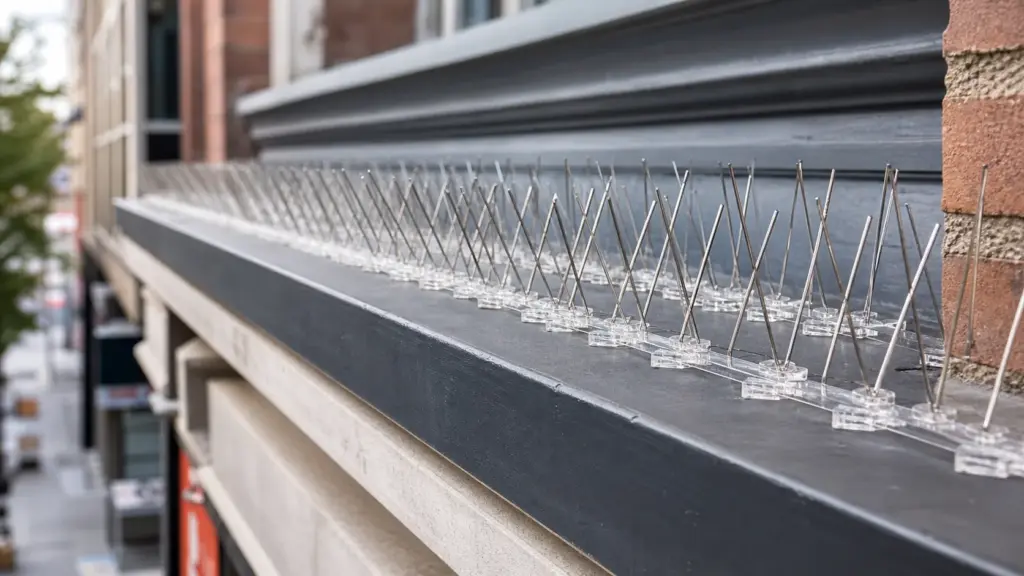
Commercial Ledge Spikes
Spikes are fitted to the ledge profile so pigeons have less room to settle on repeat landing surfaces.
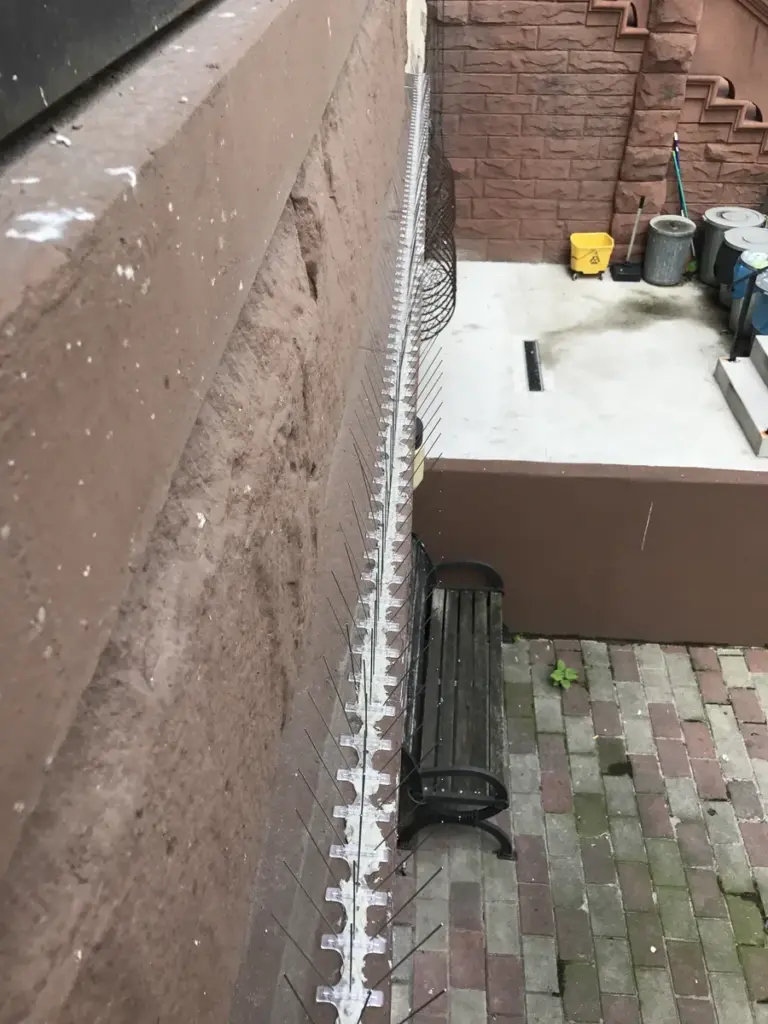
Manhattan Building Ledge
Older masonry ledges, cornices, and facade details need careful placement so deterrents look clean and stay useful.
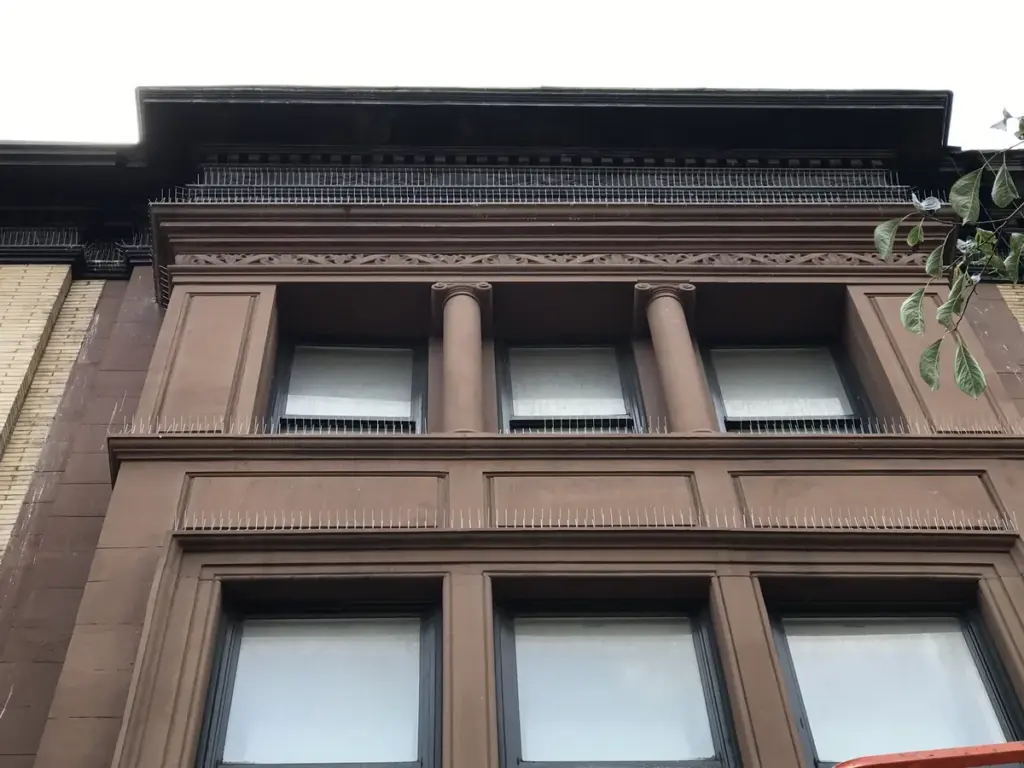
Brownstone Ledge Protection
Residential brownstones and mixed-use buildings often need targeted ledge protection without overbuilding the job.
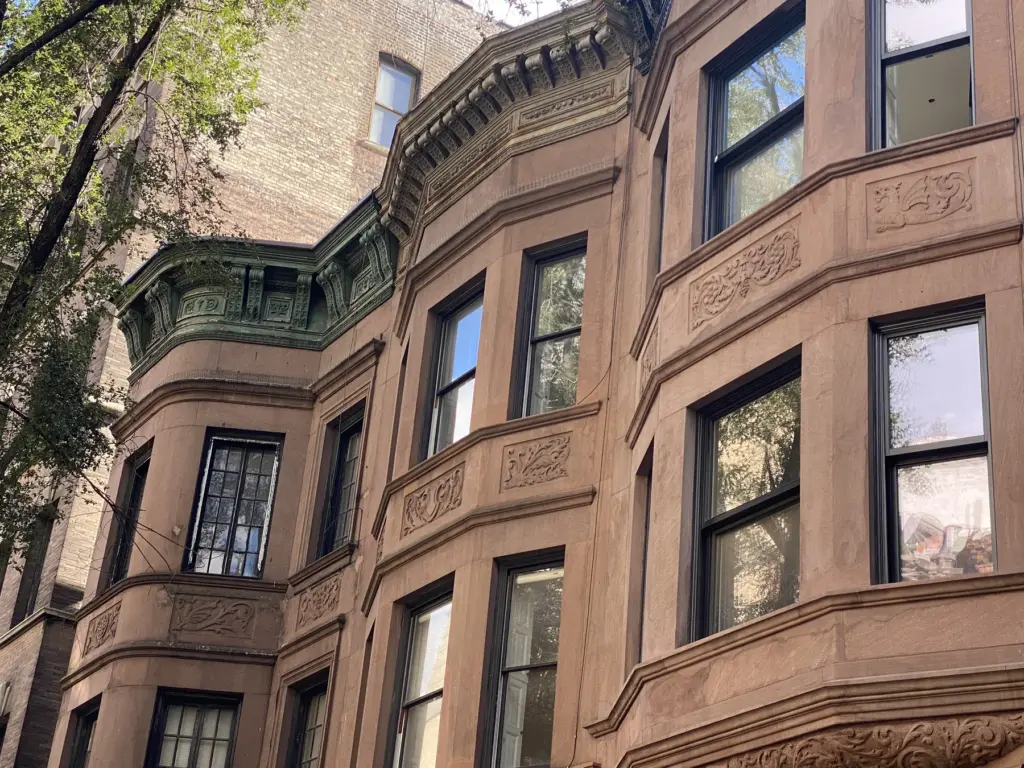
Close-Up Installation Detail
Spacing and coverage matter, especially where birds can shift to untreated edges or deeper ledge pockets.
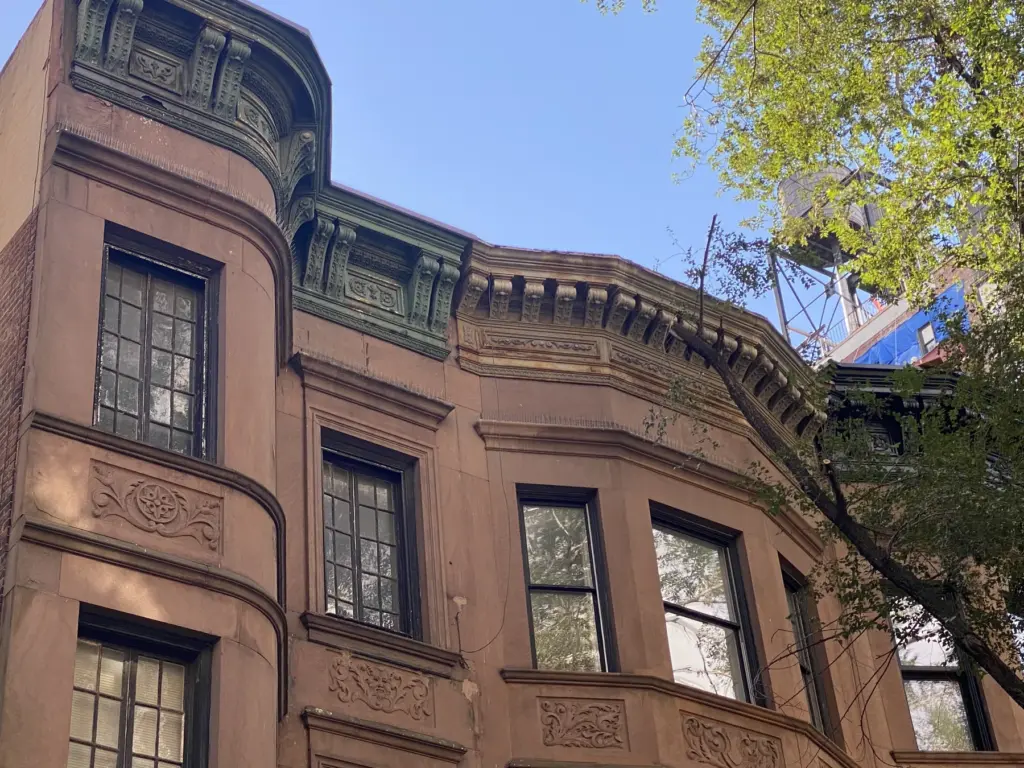
Installed by Hand
Many jobs require careful hand placement around facade details, brackets, signs, and uneven exterior surfaces.
Access and Installation Proof
Power Lift and High-Access Bird Control Work
Some NYC bird-control work cannot be handled from a simple step ladder. Facade ledges, upper-floor windows, cornices, signs, and high-access landing areas may require lift planning, site coordination, and careful installation from the correct access point.
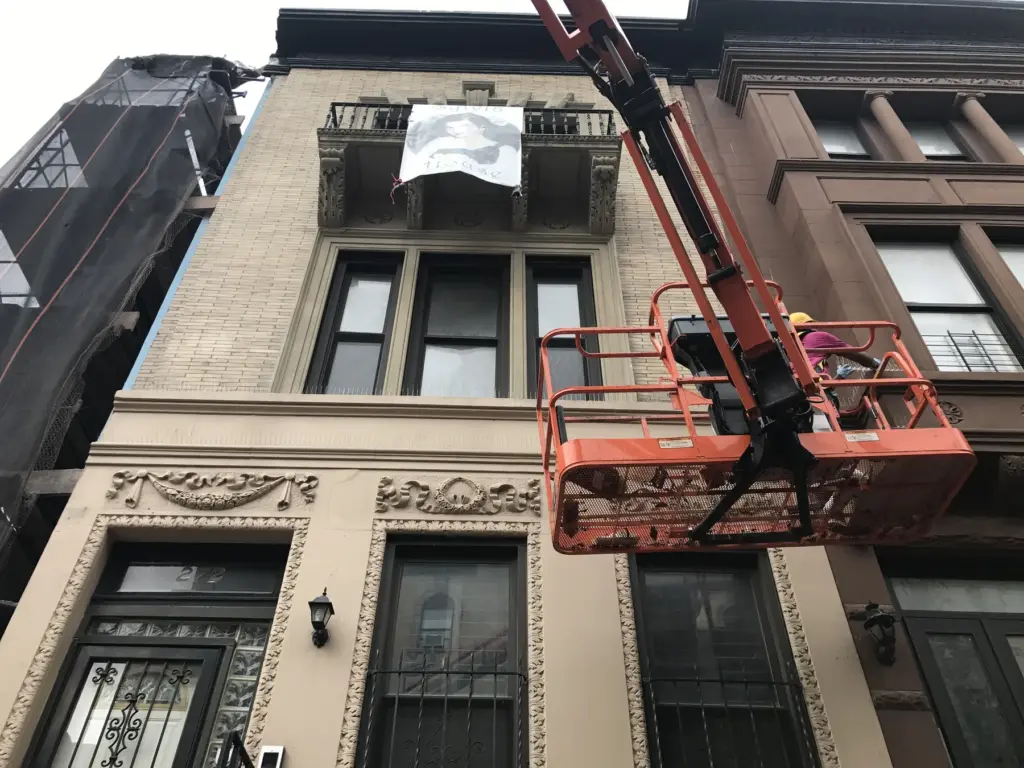
Power Lift Facade Access
Power lift access helps us reach upper facade ledges and landing surfaces that are not safely reachable from inside the building.
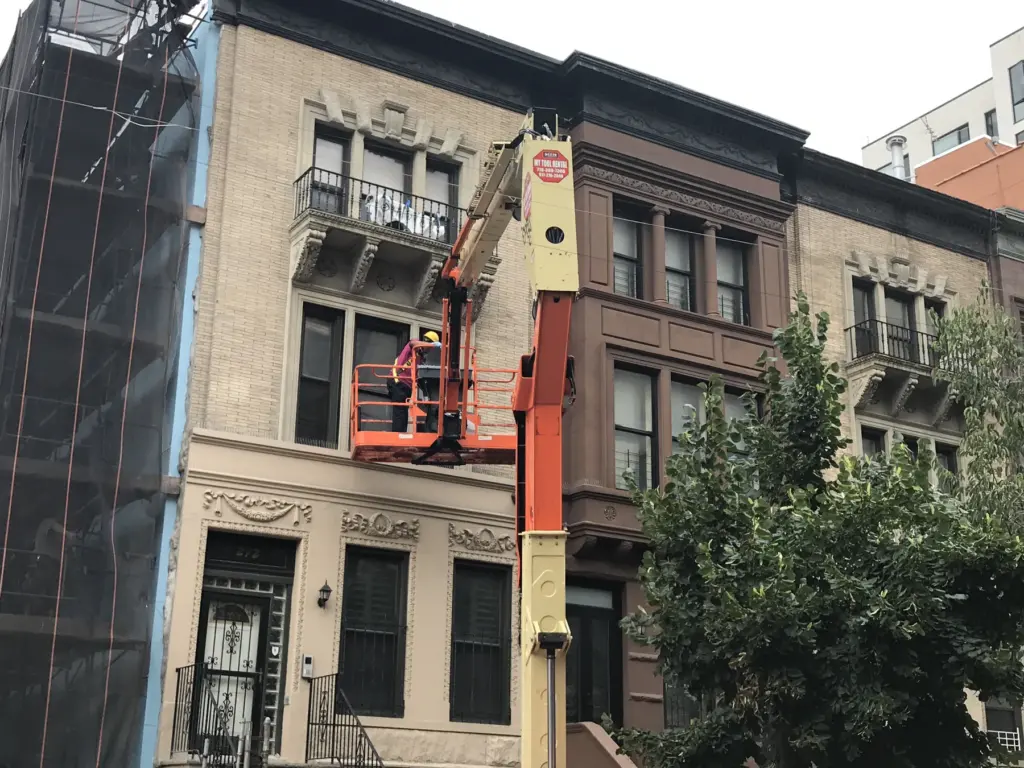
Boom Lift Building Access
Boom lifts can support exterior bird-control work on masonry facades, signs, cornices, and hard-to-reach ledges.
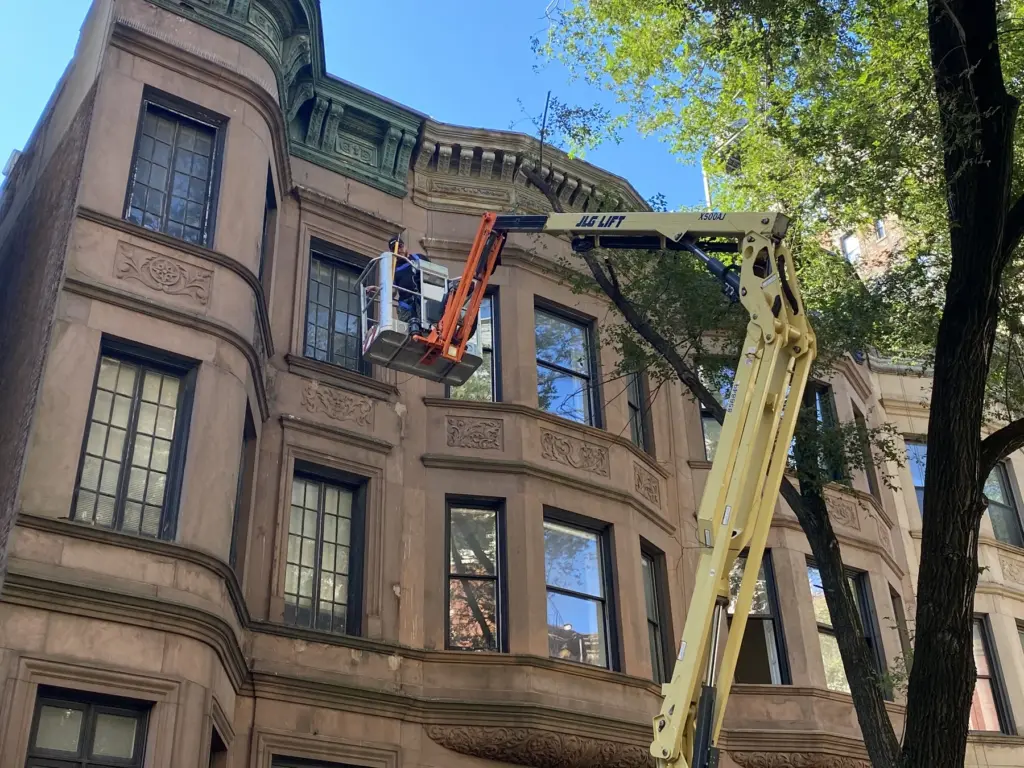
Upper-Floor Installation
High-access work is planned around the building frontage, sidewalk conditions, tenant areas, and the exact bird-pressure location.
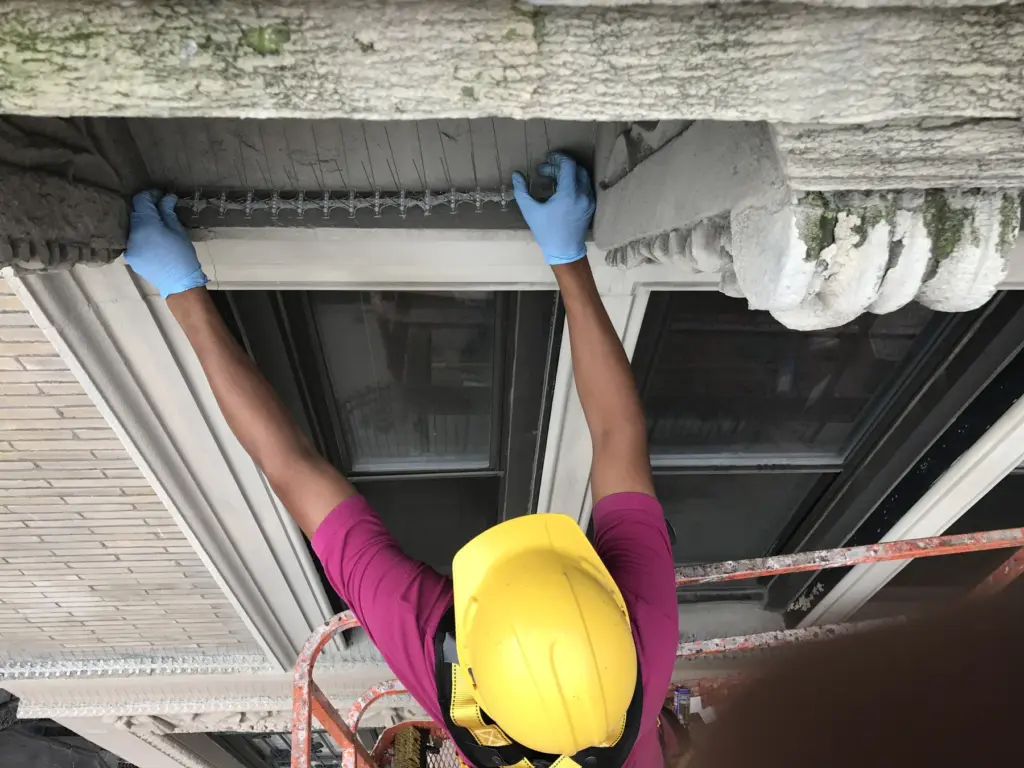
Lift-Based Spike Installation
Technicians install spikes and deterrents by hand so the placement follows the ledge and facade detail.
Recent Comments