Property-management friendly scopes
Bird Control for NYC Property Managers
Bird Control NYC helps property managers, supers, boards, ownership groups, facility teams, and portfolio managers solve bird pressure on rooftops, parapets, facades, terraces, fire escapes, courtyards, storefronts, loading areas, solar arrays, and high-rise building details.
Managed building needs
Property managers need bird control that is clear, documented, and COI-ready.
Bird complaints often arrive as tenant emails, board concerns, storefront issues, sidewalk cleanup problems, roof maintenance complaints, or repeated calls from supers. The building needs more than a vague product recommendation. It needs a clear scope tied to the surfaces birds are actually using.
For NYC managed properties, that may mean parapets, cornices, sign bands, terraces, balconies, fire escapes, roof equipment, loading docks, courtyards, solar arrays, and facade setbacks. The recommendation should explain the pressure point, the method, the access needs, and any surfaces that may remain attractive after installation.
What management teams usually need
- COI-ready coordination for commercial, co-op, condo, and mixed-use properties.
- Clear scopes for boards, ownership, supers, and maintenance teams.
- Humane deterrent, netting, spikes, exclusion, and solar bird-proofing options.
- Documentation for recurring complaints, cleaning needs, and access planning.
- Recommendations that fit tenant areas, rooftops, facades, and public-facing spaces.
Review process
A management-ready bird control scope should be easy to review and defend.
1. Clarify the complaint
We identify whether the issue is droppings, nesting, blocked access, sidewalk exposure, tenant balcony activity, roof equipment, storefront staining, or recurring cleanup.
2. Identify the active surface
The visible mess may be below the source. The active surface may be a parapet, sign band, fire escape, facade ledge, terrace, roof drain, solar array, or loading dock.
3. Build the scope
The recommendation should explain the method, access, likely sequence, related surfaces, and what photos or approvals are needed before scheduling.
Practical methods
Humane methods can still be practical for managed buildings.
Property managers often need a solution that works without making the building look patched together. Bird spikes can protect ledges, signs, parapets, and rails. Bird netting can protect balconies, courtyards, loading docks, and equipment pockets. Solar panel bird proofing can stop pigeons from nesting under arrays. Screening and exclusion can protect vents, louvers, AC sleeves, soffits, and exterior gaps.
The right plan depends on the pressure level and the property type. A co-op terrace complaint is different from a restaurant sign problem. A warehouse loading dock is different from a high-rise facade ledge. A good scope names the condition and picks the method that fits the building rather than forcing one product into every situation.
Services managers ask for
- Pigeon control for rooftops, ledges, facades, and courtyards.
- Bird spikes for parapets, signs, cornices, and narrow landing areas.
- Bird netting for balconies, loading docks, courtyards, and equipment zones.
- Solar panel bird proofing for rooftop arrays.
- Bird nesting prevention around vents, AC units, louvers, and openings.
Managed property types
- Co-ops, condos, and apartment buildings.
- Commercial buildings, restaurants, retail, and mixed-use properties.
- Warehouses, loading docks, schools, and facility buildings.
- High-rise, mid-rise, and hard-access properties.
- Portfolio properties that need repeatable documentation.
Recurring complaints
Bird pressure often becomes a management issue before it becomes a construction issue.
When the same complaint repeats, the building needs a better explanation of the source. A resident may complain about a balcony, but the birds may be coming from a nearby ledge. A storefront may be cleaning the sidewalk every morning, but the source may be a sign band or cornice. A roof may be cleaned repeatedly, but pigeons may still have shelter under solar panels or around bulkheads.
Property-management bird control should make those relationships easier to understand. The scope should help management decide whether the next step is cleanup, deterrent installation, exclusion, board review, tenant communication, or additional photos from a roof, terrace, or neighboring angle.
COI and access planning
The smoother the access plan, the easier the job is to approve.
Managed buildings often need insurance coordination, building contact information, roof access rules, elevator or loading instructions, tenant-area scheduling, and approval from a superintendent, manager, board, or ownership group. A clear bird-control scope should respect those steps instead of treating the property like a one-off residential call.
For higher buildings or public-facing work, access and staging may shape the recommendation. Some areas can be reviewed from photos first. Other areas may require roof, terrace, or exterior access to confirm the attachment points and final method. When the building knows what is needed, approvals move more smoothly.
Request a managed-property review.
Send photos, borough, property type, complaint history, affected surfaces, access notes, management contact needs, and whether a COI is required before site work.
Related building services
Property-management bird control connects multiple surfaces into one plan.
Managed buildings rarely have only one possible bird surface. A pigeon issue may involve rooftop parapets, facade ledges, terraces, balconies, solar arrays, vents, loading docks, storefront signs, courtyards, or high-rise setbacks. A strong plan links the active surfaces together so the building does not solve one complaint while leaving the next pressure point untreated.
Pigeon Control NYC | Bird Spikes NYC | Bird Netting NYC | Rooftop Bird Control NYC | Facade Bird Control NYC | High-Rise Bird Control NYC | Solar Panel Bird Proofing NYC | Bird Nesting Prevention
Documentation placeholders
Managed-property projects should show the complaint, source, and proposed prevention.
Replace these placeholders later with real project photos or anonymized examples: a tenant complaint area, the active bird surface, and the finished deterrent or exclusion. For management teams, the most useful proof connects the visible issue to the actual bird pressure point.
Trust signals that matter
- COI-ready support for managed properties.
- Property-management friendly scopes and communication.
- Commercial, residential, co-op, condo, and mixed-use experience.
- Humane deterrent and exclusion methods.
- High-rise, rooftop, facade, balcony, and solar-array awareness.
Questions
Property Management Bird Control FAQ
Can you work with property managers and supers?
Yes. We can review photos, discuss access, prepare a practical scope, and coordinate around building requirements such as COI requests, roof rules, tenant areas, and management contacts.
Do you handle co-ops and condos?
Yes. Co-ops and condos often need clear explanations for boards, residents, supers, and managing agents. The scope should explain the bird pressure and the recommended prevention method.
Can one plan cover multiple building areas?
Yes. Many buildings have connected bird pressure across roofs, facades, balconies, terraces, signs, and exterior openings. A phased plan may be appropriate when several surfaces are active.
What should a property manager send first?
Send photos of the affected area, droppings, nesting material, where birds are seen, property type, borough, access notes, complaint history, and whether COI documentation is required.
Related bird control services
Pigeon Control NYC | Bird Spikes NYC | Bird Netting NYC | Rooftop Bird Control NYC | Facade Bird Control NYC | High-Rise Bird Control NYC | Solar Panel Bird Proofing NYC | Bird Nesting Prevention | All Bird Control Services
Access and Installation Proof
Power Lift and High-Access Bird Control Work
Some NYC bird-control work cannot be handled from a simple step ladder. Facade ledges, upper-floor windows, cornices, signs, and high-access landing areas may require lift planning, site coordination, and careful installation from the correct access point.
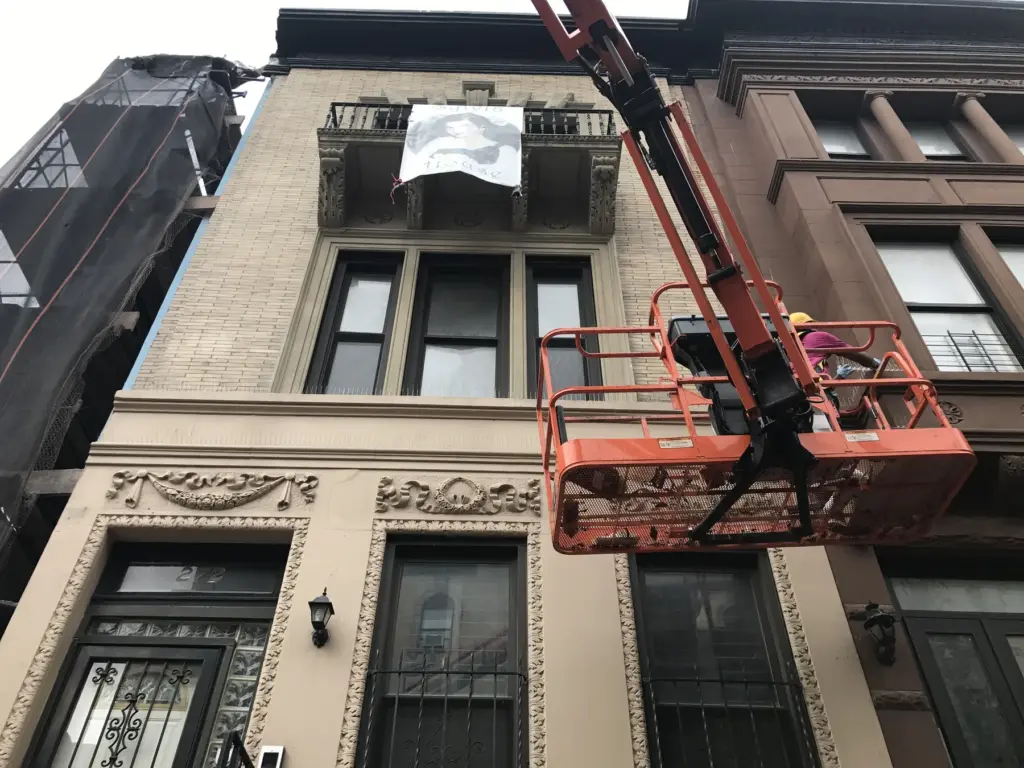
Power Lift Facade Access
Power lift access helps us reach upper facade ledges and landing surfaces that are not safely reachable from inside the building.
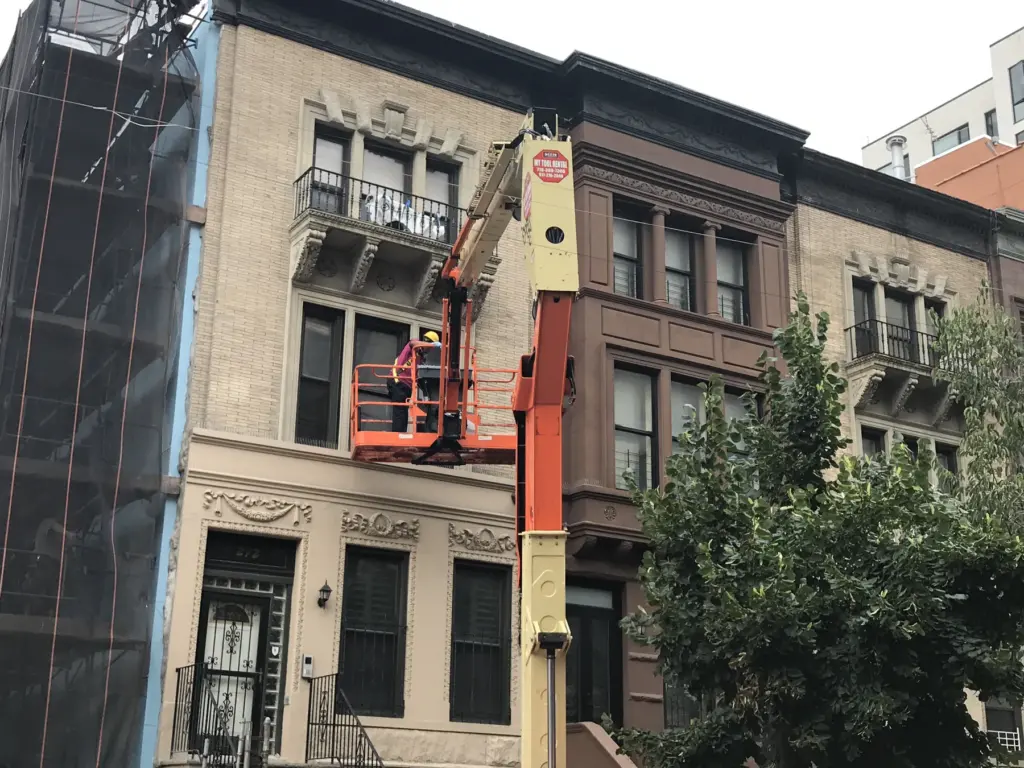
Boom Lift Building Access
Boom lifts can support exterior bird-control work on masonry facades, signs, cornices, and hard-to-reach ledges.
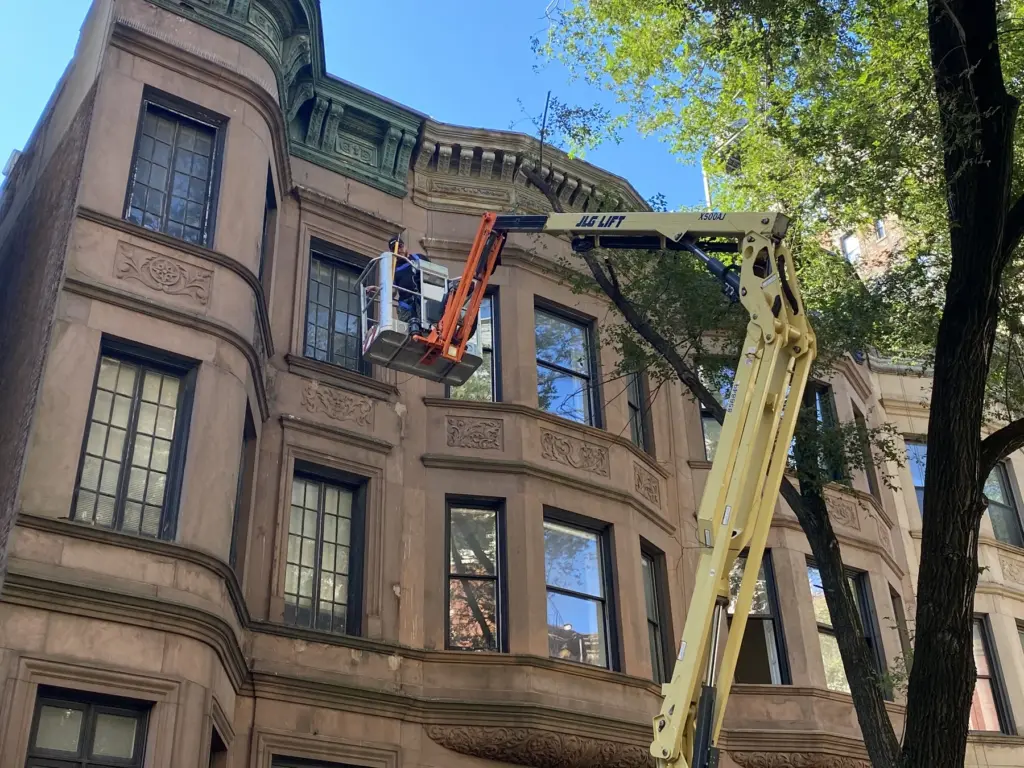
Upper-Floor Installation
High-access work is planned around the building frontage, sidewalk conditions, tenant areas, and the exact bird-pressure location.
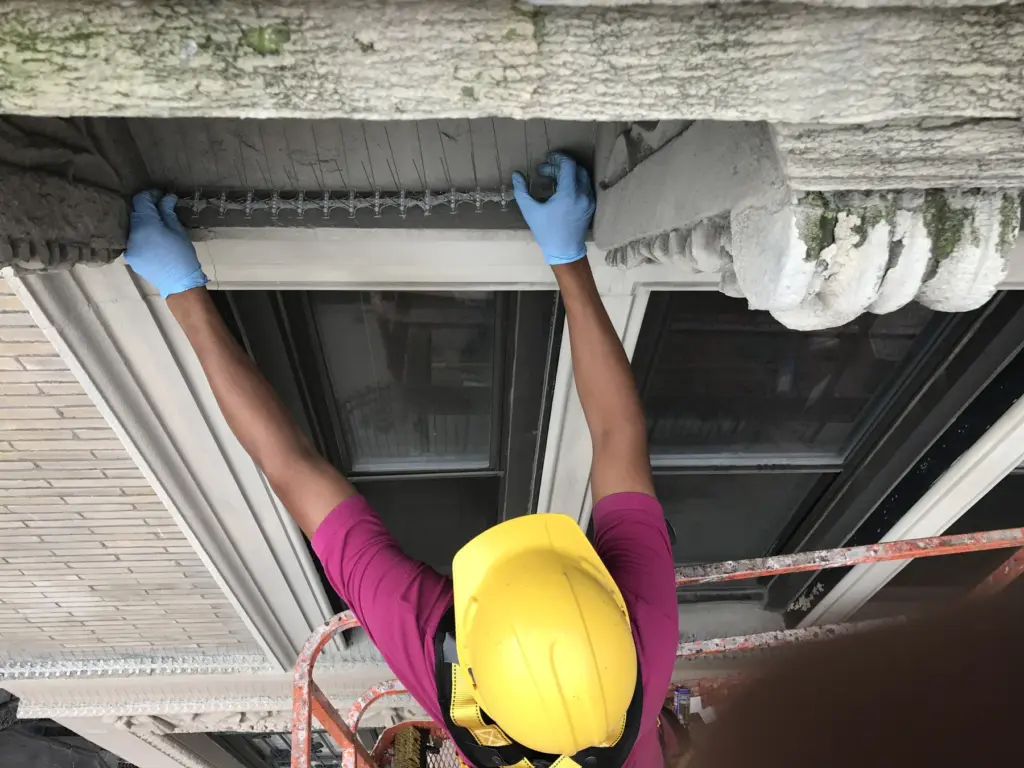
Lift-Based Spike Installation
Technicians install spikes and deterrents by hand so the placement follows the ledge and facade detail.
Recent Comments