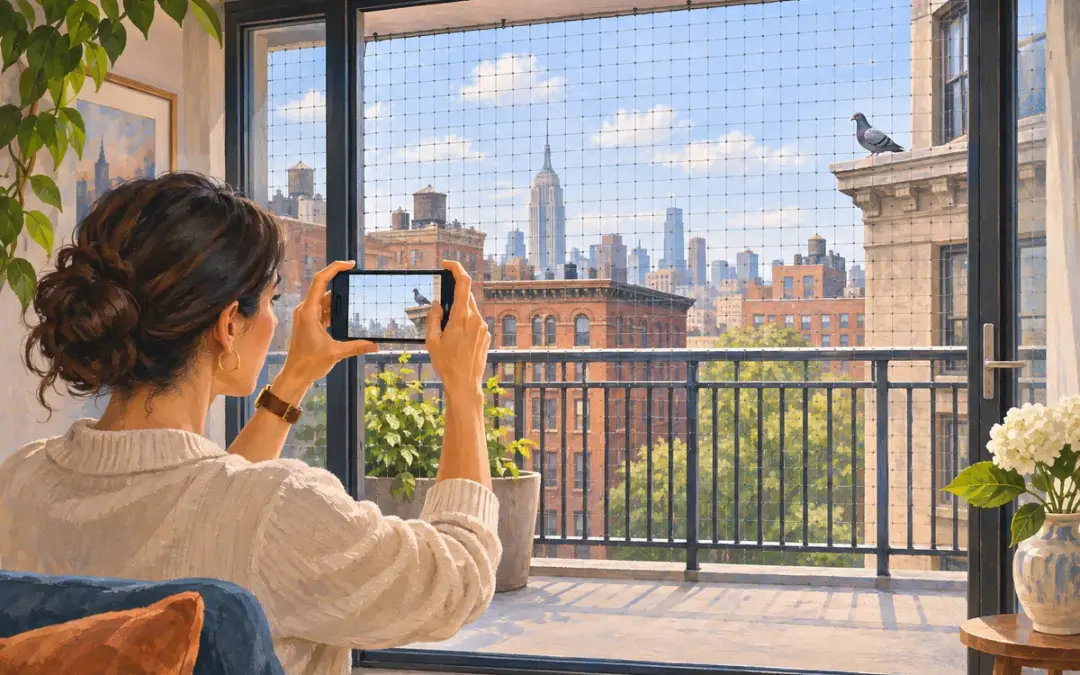
Illustration The illustrated netting is not an approved attachment or exit design.
Published by Bird Control NYC.
Once bird-proofing work is complete, it helps to have a simple record of what was installed and where. You can then describe any later changes clearly, whether you are a resident, property owner, or building manager.
You do not need to test the installation or inspect hard-to-reach areas yourself. The useful next step is to understand the completed scope, keep the handover information, and observe from places you can safely access. Here is what to pay attention to.
Know which areas were included
Keep a copy of the agreed scope and any completion information provided. Make sure you can identify the protected areas and distinguish them from nearby areas that were outside the job.
If the description is unclear, ask for clarification while the work is still fresh in everyone's mind. A marked photo or plain written description can be helpful. This gives anyone managing the property a shared reference, especially when more than one person receives reports from residents or staff.
Keep the instructions with the property records
Save any care, access, or use instructions supplied for the installed materials. Ask what building staff should know before unrelated work takes place nearby, and keep that information accessible to the person coordinating contractors.
If any warranty or other written terms were provided, file those too and read their actual conditions. Do not assume that a particular follow-up visit, repair, or service is included unless your agreement says so. The paperwork should tell you what was agreed, rather than leave you relying on a remembered conversation.
Notice where birds are actually landing
Seeing birds near the building is different from seeing them enter or settle in the area that was treated. When you notice activity, record the exact location and what the birds are doing.
For example, “two birds standing on the neighboring parapet” is more informative than “the birds are back.” If birds appear to reach a protected area, note the date, time, and apparent entry point from a safe viewing position. These observations help explain the issue without requiring you to diagnose its cause.
Compare changes with a starting record
If practical, keep a few dated photos taken after completion from a normal, accessible viewing spot. Later photos from the same position can make visible changes easier to explain.
Record anything that appears different, such as material that looks loose or an opening that was not previously apparent. A photograph may not establish what caused a change or whether the installation is affected. It can still provide a useful starting point for a question to the installer. Do not pull, press, or reposition materials to investigate.
Note other work around the installation
Building work can change the surroundings. If equipment is moved, an adjoining surface is repaired, or another contractor works nearby, note what happened and when.
Pass along the existing installation information before that work begins where possible. If someone notices a change afterward, the timeline may help explain what needs to be checked. Avoid assuming fault from timing alone; keep the record factual and focused on what was observed.
Send a clear report if you have concerns
A helpful report includes the affected location, the date, a brief description, and safe photos if available. Refer to the original job details so the recipient can understand whether the observation concerns an included area.
Do not climb, dismantle materials, disturb birds, or attempt to open a blocked space. If a bird appears trapped, contact the installer promptly and explain what you can see. If it appears injured or distressed, seek advice from a wildlife rehabilitator. Do not dismantle the installation or handle the bird yourself.
For questions about an existing installation, contact the installer named in your agreement with the location and what you have observed. Photos are helpful, but optional.
If you are planning new bird-proofing work, contact Bird Control NYC to discuss your property's needs. A short description is enough to start.
For related service information, see our bird-control services.
Browse more Bird Control NYC resources.
Need help with a bird problem?
Send photos and get a practical next step.
Tell us what you are seeing around the ledge, roofline, vent, solar panels, balcony, terrace, droppings, or nesting area. Bird Control NYC can help identify the issue and recommend a humane deterrent, cleanup, or exclusion plan.
Recent Comments